



Business is something that every one of us wanted to do. But there is no secret to success. Sometimes innovation works, sometimes solving real-world problems, which is essentially product-market fit, sometimes funding, and sometimes marketing. But at any given point, distribution is something that everyone needs. If companies understand this at the earliest, the results will be astonishing. Now, if you see any single product or item, there is one dominant player. Right? Starting from biscuits to buildings, airplanes, and what not everywhere. And when we talk about the FMCG and beauty products, there is a tough competition. Amongst such a competitive industry, there is one player who grabbed the market share and attention and became a sensation a while back. But what they did is so simple, but marketing and distribution have helped them build a billion-dollar business.
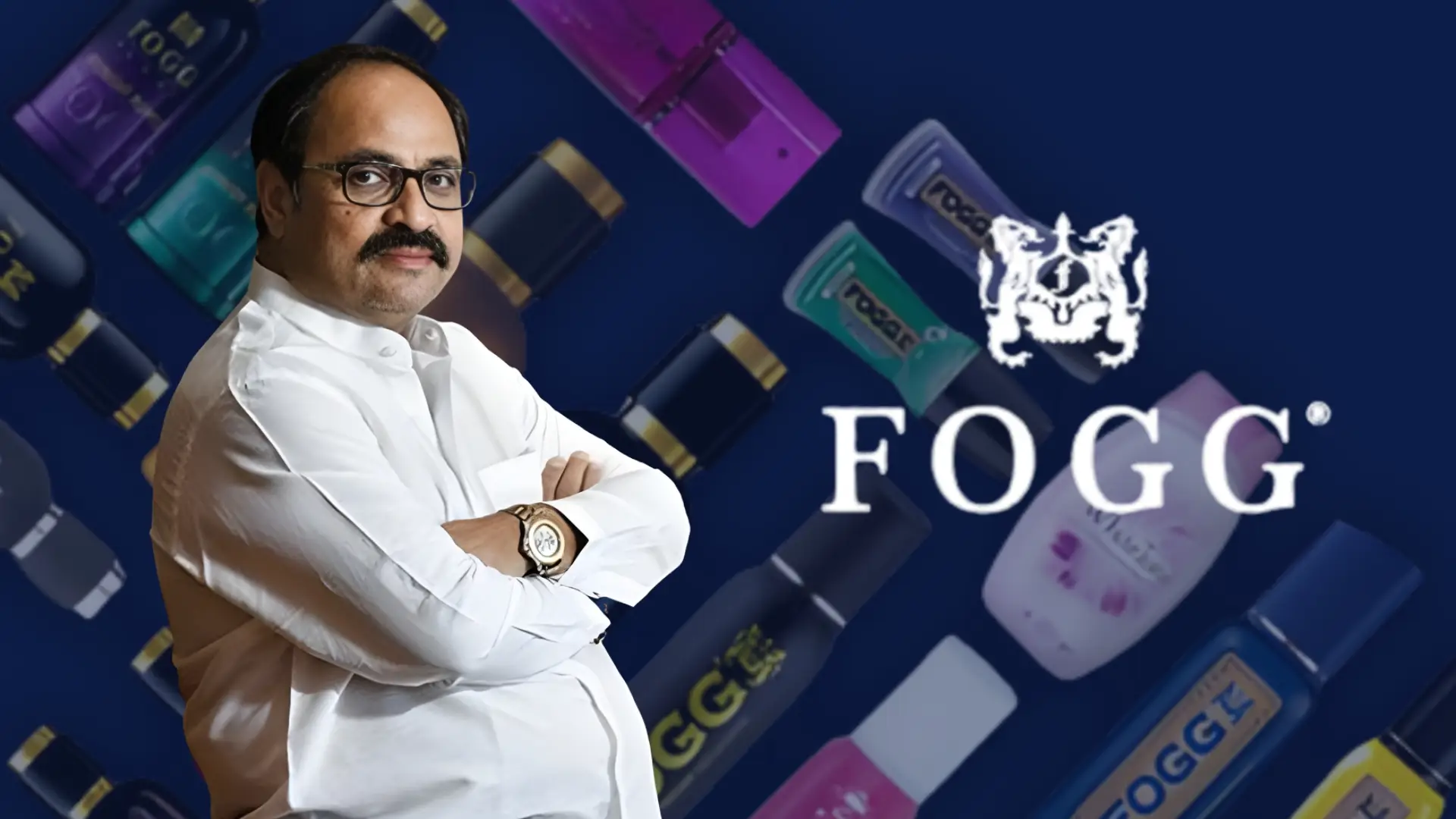
The story that we are diving into today is about Fogg. So, what made Fogg, a simple bottle with no celebrity face, no seductive commercials, and no glamorous packaging, dominate one of the most cutthroat consumer markets in India?
To understand that, we need to rewind the deodorant industry before Fogg entered. For nearly a decade, deo advertising in India followed one script: A man sprays deodorant, then women chase him, and confidence levels skyrocket. Many companies followed the same script and executed it in different ways. Every brand was selling a fantasy and not a functional benefit.
But there was a complaint amongst customers about the fast completion of that deal. Most deodorants were 60–70% gas. So, every spray sounded big but delivered very little liquid perfume. This gap between expectation and reality was invisible and started becoming a big problem. And that is where Darshan Patel spotted an opportunity others overlooked. And then he reframed the entire category with one clear message. “No gas. Only perfume. That alone made it a sensation.
Now that alone didn’t make it what it has achieved, but there are some growth engines that helped it. One of those engines was distribution. Instead of relying only on modern retail and large supermarkets, Fogg went where demand actually existed, the everyday retail India trusted: kirana stores, chemists, cosmetic counters, supermarkets, malls, online platforms, and eventually airports. This seems obvious, but in markets where shelf space is limited, competition is brutal, and brand loyalty is low, being present is half the victory. While older brands were busy competing for premium placements, celebrity faces, and aspirational image-building, Fogg focused on creating availability and accessibility.
So now the equation became powerful: A clear value proposition (“No Gas, Only Perfume”) A visible product, A repeatable, memorable brand line and, most importantly, distribution that never allowed friction.
But marketing when joining the distribution is a big boost. It launched one of the most iconic lines in Indian advertising: Kya chal raha hai? ”Fogg chal raha hai.” Now think for a bit: what do we think when someone says that? Fogg is the most popular deodorant in the country. Right? That perception alone became a booster because humans naturally try what everyone else seems to be using.
And in terms of executing the idea, Fogg didn’t immediately build massive manufacturing plants or try to vertically integrate everything like traditional FMCG playbooks. The company opted to outsource production and focused energy on branding, distribution, and demand creation. This gave them speed, flexibility, and focus.
Then comes the pricing. They strategically priced it, and even on that front it worked so well for them. And once a product becomes the default, it becomes impossible to displace. That’s how Fogg created a sensation. Fogg became more than just a popular deodorant; it became the growth engine of its parent company, Vini Cosmetics. By FY24, the company crossed an estimated ₹1,125 crore in revenue, and a significant portion of that momentum can be traced back to Fogg’s performance and recall in the market.
And the world started noticing. In 2021, global investment giant KKR acquired a controlling stake in Vini Cosmetics for $625 million, instantly valuing the company at well over a billion dollars. That kind of investment doesn’t happen because of hype. It happens when a brand has demand, potential, and a defensible market position.
That’s how Fogg has strategically positioned itself, and it has become the growth engine of success.
Read Full Article: India mandates active SIMs for WhatsApp, Telegram access under new cybersecurity rules