



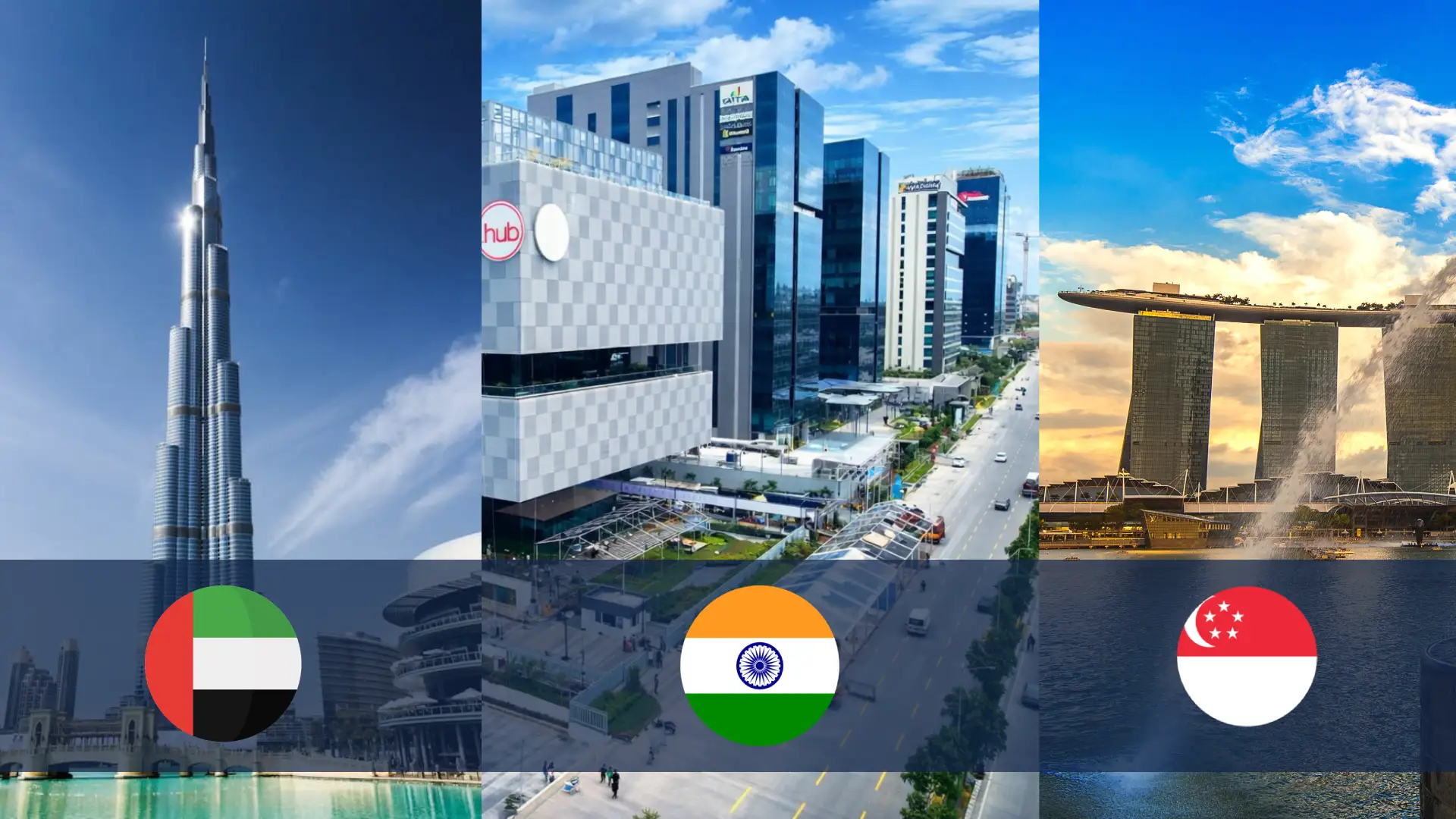
For most of the last three decades, global startup narratives have revolved around one geography. Silicon Valley was not just a place; it was a reference point. But having closely tracked startup ecosystems across India, Dubai, and Singapore for over 30 years, it is increasingly clear that a different, more distributed model of innovation is taking shape one that is pragmatic, capital-efficient, and globally connected.
This is not about replacing Silicon Valley. It is about building technology companies differently, using the complementary strengths of three regions that were never meant to operate in isolation.
India: Where Products Are Built, Not Just Outsourced
India’s startup story has evolved far beyond cost advantage. What stands out today is execution depth.
Startups across fintech, SaaS, AI, logistics, and healthtech increasingly build their entire product lifecycle in India from architecture and UX to data infrastructure and continuous iteration. Indian engineering teams are no longer “delivery units” they are decision-makers in product strategy.
Equally important is India’s market scale. Products tested here are stress-tested by default on pricing sensitivity, infrastructure constraints, and diverse user behavior. This produces technology that is resilient, adaptable, and globally competitive.
In practical terms, India has become the engine room of this tri-regional collaboration where speed, talent density, and experimentation converge.
Dubai: Where Capital Meets Global Ambition
Dubai’s role in the startup ecosystem is often misunderstood. It is not trying to be a Silicon Valley clone, nor is it just a regional hub. Its real strength lies in capital orchestration and global access.
Over the last decade, Dubai has emerged as a serious node for:
- Sovereign and family office capital
- Late-stage and growth funding
- Cross-border partnerships
What makes Dubai distinctive is the alignment between capital and ambition. Funding here often comes with strategic patience and an appetite for global expansion particularly into the Middle East, Africa, and Europe.
For many startups built in India or governed from Singapore, Dubai becomes the commercial and capital bridge to the world.
Singapore: Where Structure, Trust, and Innovation Intersect
Singapore completes this ecosystem triangle with something startups often underestimate early on: discipline.
It is the preferred base for:
- Holding companies and IP ownership
- Regulatory compliance and governance
- Institutional investor confidence
Singapore’s startup ecosystem excels in areas where credibility matters deep tech, AI, biotech, climate tech, and regulated industries. Government-backed grants, research institutions, and a predictable regulatory environment allow startups to think beyond short-term growth and focus on long-term defensibility.
In many ways, Singapore acts as the stabilising force in this tri-regional model ensuring that fast growth does not come at the cost of governance.
How the Tri-Regional Model Works on the Ground
The most successful startups across these regions follow a clear pattern:
- Product and engineering in India
- Corporate structure and IP in Singapore
- Capital, partnerships, and global sales in Dubai
This is not fragmentation; it is intentional design.
By distributing responsibilities based on regional strengths, startups achieve:
- Lower burn rates
- Faster go-to-market timelines
- Easier global expansion
- Reduced dependence on a single ecosystem
Funding Has Become Borderless Architecture Matters More Than Address
One of the most significant shifts observed is how investors evaluate startups today. Geography alone matters less than how a company is architected.
It is now common to see:
- Early innovation funded in India
- Institutional credibility anchored in Singapore
- Growth capital raised from Dubai
This funding flow reflects a broader truth: modern startups are global by design, not by accident.
Resource Management: The Silent Advantage
Beyond capital and talent, this tri-regional collaboration excels in resource optimisation.
Engineering costs are controlled without sacrificing quality. Capital raised in Dubai stretches further when deployed in India. Governance in Singapore ensures funds are used with accountability. The result is startups that survive longer, learn faster, and scale smarter.
Why This Model Is Gaining Momentum
The world no longer rewards startups built in isolation. Markets are fragmented, regulations vary, and capital cycles are unpredictable.
What India, Dubai, and Singapore collectively offer is balance:
- Speed without chaos
- Capital without excess
- Structure without rigidity
This is why more founders, investors, and policymakers are paying attention to this emerging corridor.
A New Kind of Innovation Story
This tri-regional model does not seek headlines. It is built on execution, not hype. And that is precisely why it is shaping the next generation of global technology companies.
The future of innovation will not belong to a single valley. It will belong to ecosystems that understand how to collaborate across borders, leveraging diversity as a strength rather than a complication.
Also Read : Indian enterprises in Singapore set to ride on biz adaptation grant to counter US tariff impact