



In 2025, Hyderabad quietly crossed a line that many Indian cities have spent years trying to reach. Global Capability Centres, once treated as cost-efficient offshore units, began arriving in the city with a very different mandate: build core, decision-critical operations that shape global business outcomes. The shift was subtle, but unmistakable.
This was not a year of exploratory offices or pilot teams. It was a year of long-term bets.
Across industries, multinational corporations chose Hyderabad as the location for engineering hubs, data platforms, AI-led operations, enterprise technology teams and digital transformation centres. The pattern mattered more than the volume. Companies from healthcare, retail, finance, consumer goods and media converged on the same city at the same time a signal that the fundamentals had aligned.
Several high-profile names anchored this momentum. Eli Lilly expanded its technology and innovation footprint in Hyderabad, positioning the city as a global hub for digital platforms, automation and advanced analytics supporting healthcare worldwide. McDonald’s selected Hyderabad for its largest office outside the United States, establishing a global capability centre to drive technology, data and operations across markets. Retail giant Costco confirmed plans for its India GCC in the city, focused on technology and analytics. Consumer major Heineken committed to an Asia-Pacific GCC, while Dai-ichi Life partnered to establish its first major global capability centre outside Japan. Financial services firm Charles Schwab began laying the groundwork for its India operations in Hyderabad, and global brands such as Netflix and L’Oréal expanded enterprise and digital teams from the city.
What makes this wave different is intent. These centres are not designed as downstream execution units. They are being built as integrated parts of global operating models. Product engineering, platform architecture, compliance technology, AI models and enterprise decision systems are increasingly being developed in Hyderabad and deployed worldwide.
Talent is the first reason this worked. Hyderabad offers depth across software engineering, cloud infrastructure, data science, cybersecurity and life sciences, but without the saturation pressures that have reshaped older technology hubs. Hiring is competitive, yet stable. Attrition is lower. Teams scale faster and retain institutional knowledge longer. For global firms planning five- and ten-year roadmaps, this stability is a strategic asset.
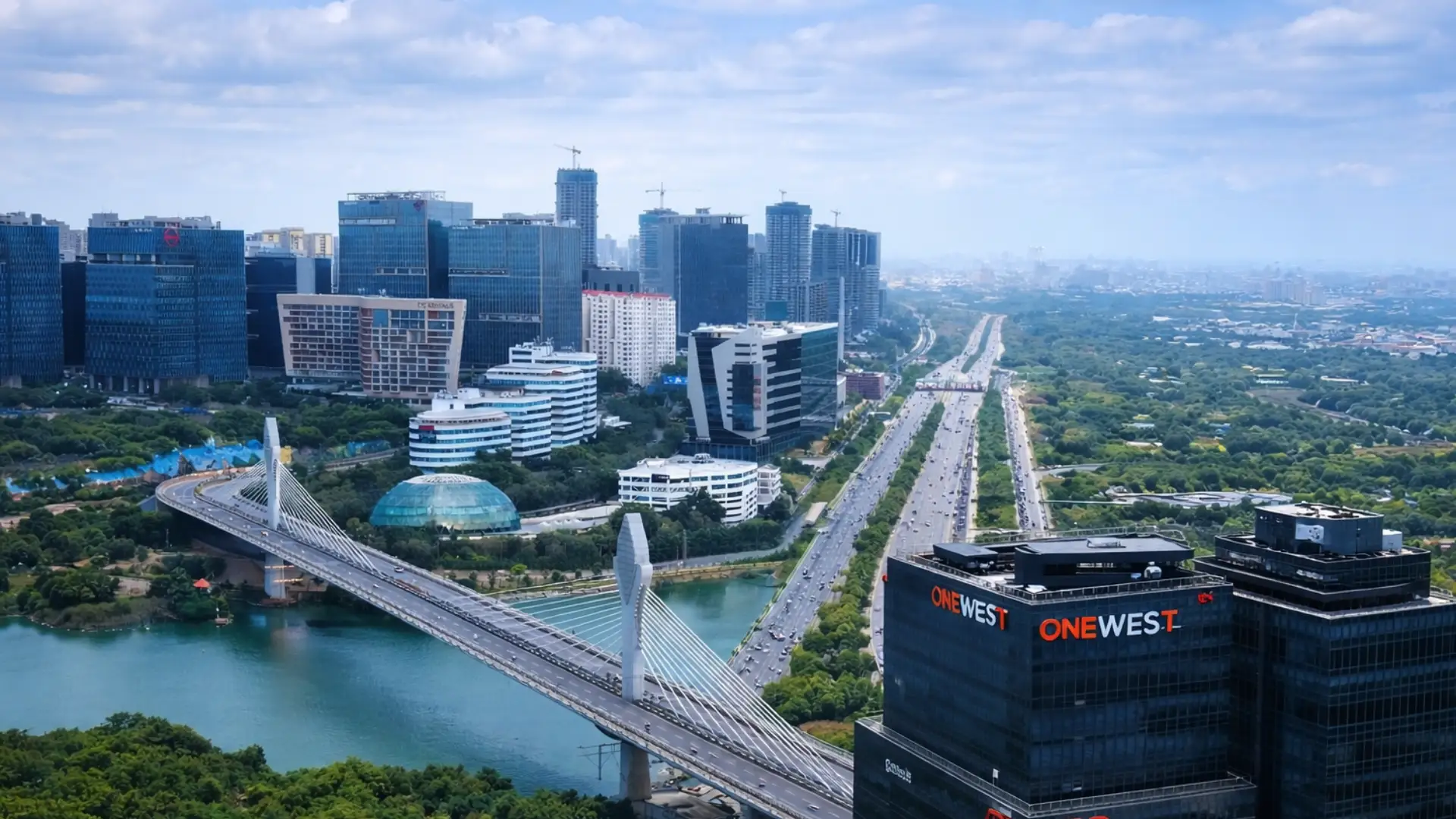
The second factor is scalability. Hyderabad’s technology corridors were designed for expansion rather than retrofitted for growth. Large, contiguous office campuses in HITEC City and the Financial District allow companies to move from hundreds of employees to several thousand without fragmenting teams or culture. In 2025, when enterprises sought to consolidate global functions under one roof, this capability became decisive.
Cost efficiency still matters, but in a more mature sense. Hyderabad’s appeal lies in predictability rather than bargain pricing. Real estate, talent and infrastructure costs remain competitive without the sharp inflation cycles seen elsewhere. This allows leadership teams to commit capital confidently, instead of expanding cautiously in phases.
Policy execution has reinforced this momentum. Administrative processes are relatively fast, approvals are clearer, and coordination across departments has reduced friction for large employers. For global companies operating across multiple jurisdictions, reliability often outweighs incentives and Hyderabad has positioned itself accordingly.
Equally important is livability. As GCCs move beyond entry-level hiring and bring senior roles to India, cities must support long-term retention. Hyderabad’s residential expansion, international schooling, manageable congestion relative to other metros, and cultural accessibility make it easier to relocate experienced professionals and their families. Over time, this translates into leadership continuity and stronger global integration.
The result is a new positioning. Hyderabad is no longer competing to be an alternative to established hubs. It is becoming a primary node in global enterprise networks capable of hosting work that influences how products are built, how risks are managed and how businesses scale internationally.
What comes next will determine whether this surge becomes a sustained advantage. Talent pipelines must expand, infrastructure must keep pace, and affordability must be protected as demand rises. But the signals from 2025 are clear. The convergence of global companies choosing Hyderabad was not accidental. It was the outcome of years of ecosystem building finally reaching critical mass.
For global corporations deciding where to anchor their next decade of capability, Hyderabad has moved from an option to a conclusion.
Also Read : McDonald’s opens largest global hub outside US in Hyderabad