



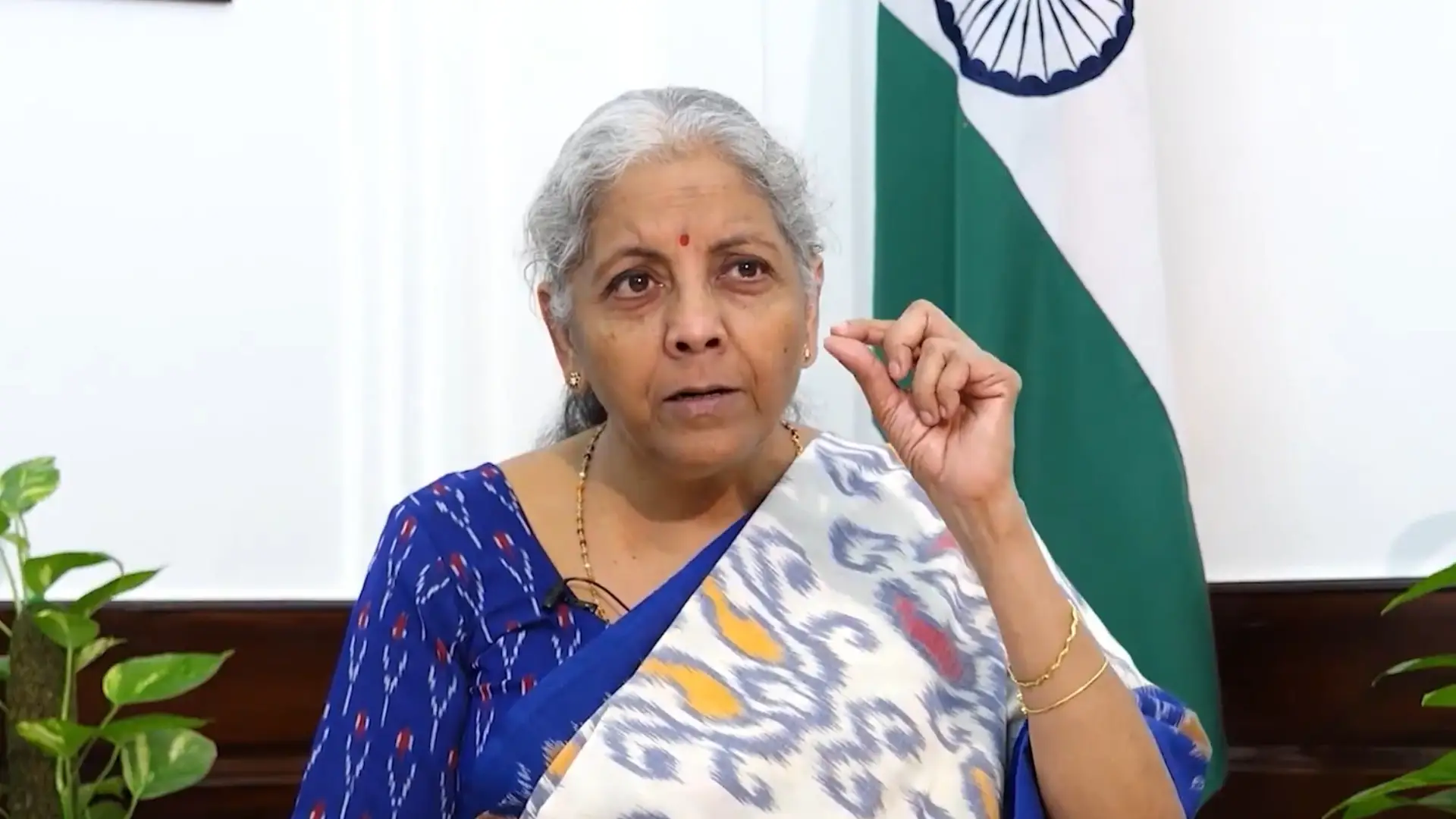
India’s Finance Ministry is examining a proposal that could reshape how millions of households manage their tax bills, as policymakers weigh an optional joint income-tax regime for married couples ahead of the Union Budget 2026.
The idea, submitted by the Institute of Chartered Accountants of India (ICAI) in its pre-budget recommendations, would allow spouses to pool incomes and file a single return if they choose. NDTV reported on January 15 that the government is actively considering the framework. Finance Minister Nirmala Sitharaman is due to present the Union Budget on February 1, putting the suggestion squarely in the pre-budget spotlight.
A New Framework for Household Taxation
India’s current system treats each spouse as a separate taxpayer, regardless of marital status, with no mechanism to account for household-level income or expenses. The ICAI proposal would overlay an elective joint-filing option on top of the existing structure, meaning couples could either adopt the new regime or remain with individual returns, depending on which is more beneficial.
The institute has recommended that married couples opting for joint filing receive a basic exemption limit of Rs 8 lakh, double the Rs 4 lakh threshold available to individual taxpayers under the new tax regime. The proposal also calls for proportionately wider tax slabs, with the top 30% rate kicking in only when combined income exceeds Rs 48 lakh.
To qualify, both spouses would need valid Permanent Account Numbers (PANs). Under the suggested slab design, joint income between Rs 8 lakh and Rs 16 lakh would be taxed at 5%, while earnings from Rs 16 lakh to Rs 24 lakh would fall into the 10% bracket. Above that, progressively higher rates would apply, culminating in the 30% slab beyond Rs 48 lakh.
Experts See Benefits for Single-Income Families
Supporters say the measure could especially benefit single-income or uneven-income households, where one spouse’s lower slabs and exemptions often remain unutilized because the other partner shoulders most of the earnings.
“Today, the tax burden shared in practice is largely borne by individual salary earners,” Karthik Narayan, vice president for title, tax and transition at Stellar Innovations, told Business Today. He argued that a structured joint-filing framework could better align taxation with household realities, by recognizing shared expenses and simplifying compliance through digital processes.
Chartered accountant Suresh Surana made a similar case in an Economic Times column on January 13, contending that an elective joint regime with distinct slabs for couples would more accurately capture a household’s overall ability to pay, rather than treating spouses as isolated economic units.
Global Models Inform Debate
The ICAI proposal draws inspiration from jurisdictions such as the United States and Germany, where married couples are allowed to file jointly and are effectively treated as a single economic unit for tax purposes. Proponents argue that similar architecture in India could reduce incentives for income-splitting across family members, help curb tax evasion, and align tax incidence more closely with household cash flows.
For New Delhi, the decision will hinge on balancing revenue considerations with political and social objectives. An optional joint-filing window that delivers visible savings to middle-class families ahead of Union Budget 2026 could be attractive, but it would also lock in a new long-term structure for personal taxation. How far the government is willing to go in redesigning that framework may become clearer when Nirmala Sitharaman rises to present her budget on February 1.