



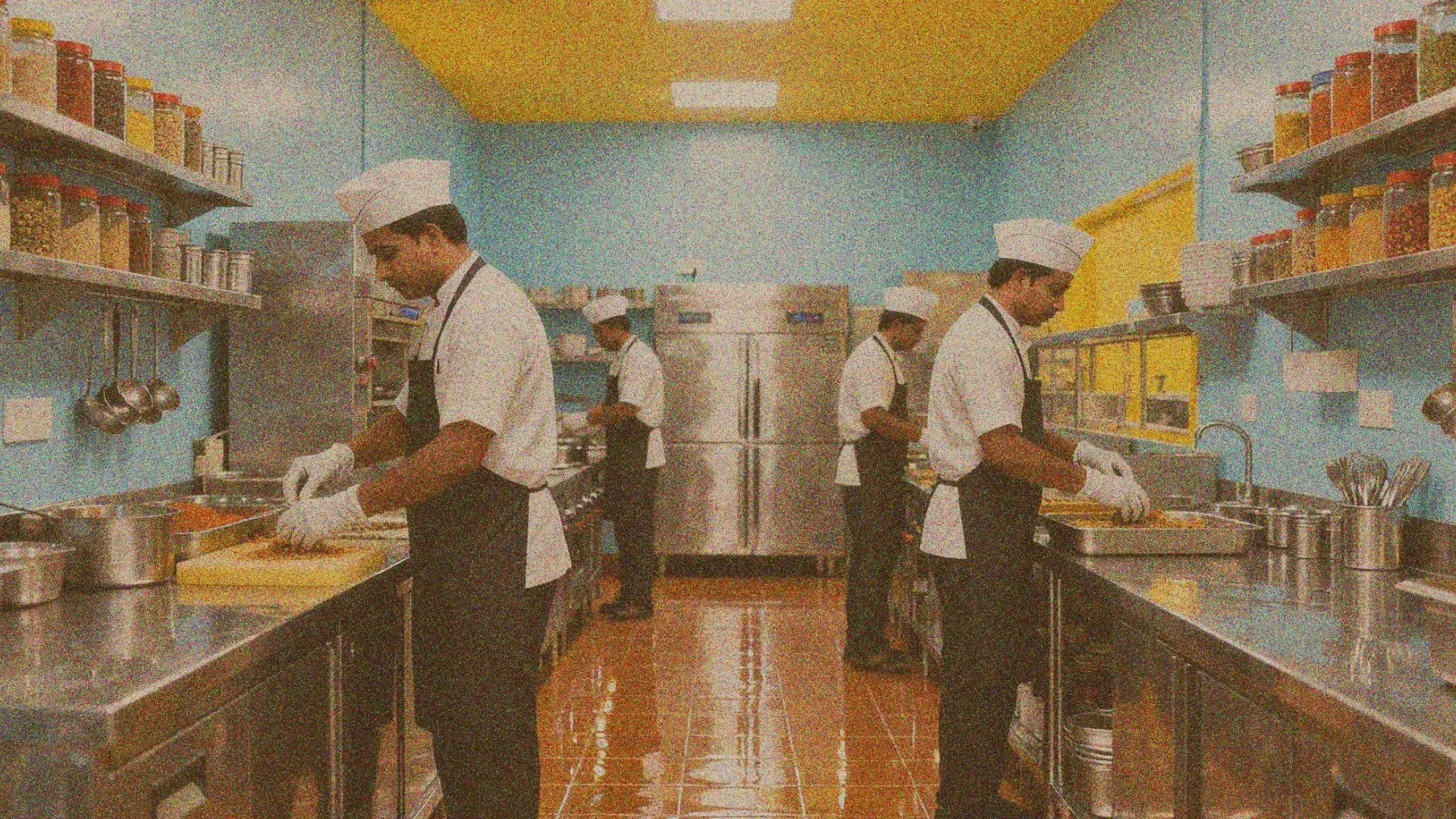
How often do you order online? What do you order? If you are someone ordering online, tell me, where do you order from? Well, if it is biryani, there are higher chances that you will order from a famous restaurant. But when it comes to other fast foods, pizzas, and baked items, there is a higher possibility that you are ordering them from a cloud kitchen.
Over the last few years, cloud kitchens have grown across the country at a speed traditional restaurants simply couldn’t match. Why? Because the model is flexible, efficient, and far more commercially viable.
No front-of-house staff, no expensive real estate, and no fancy interiors just a focused kitchen, smart menu engineering, and strong delivery execution. This opens the doors for passionate first-time entrepreneurs, home chefs, and small business owners to start their own food brand at a fraction of the cost.
And because of this, the way India consumes food is changing. We’re no longer restricted by which restaurant exists in our neighborhood because cloud kitchens have expanded choice, pushed quality competition, and made it possible for dozens of new micro-brands to reach our doorstep within 30–40 minutes.
This shift isn’t just about convenience. It’s reshaping India’s food culture, one delivery at a time.
In India, the cloud kitchen market was valued at around USD 1.13 billion in 2024, and it is projected to grow to approximately USD 2.84 billion by 2030. And there are other estimates saying that the market will reach USD 3.21 billion by 2033, with a CAGR of 12.7% from 2025 to 2033. According to the IMARC Group report, South India held a significant share (over 35%) of the cloud kitchen market in 2024.
But the real question is why this industry is growing so rapidly. What is driving this surge? And why are cloud kitchens scaling faster than any other food-service format in India?
First, and without any debate, the strongest reason is low-cost setup and high scalability.
Traditional restaurants require prime locations, interior design, seating space, and a full staff. Cloud kitchens remove all of that. A small 200–300 sq. ft kitchen can be set up with a fraction of the cost, and that lower barrier makes expansion extremely easy. Brands can open 10 cloud kitchens for the cost of one dine-in outlet, which allows them to scale across cities at unprecedented speed.
And it is not relied on footfall. They depend on delivery demand. This means a single kitchen can run different brands at once and deliver different items. This increases kitchen utilization and profitability.
With delivery apps offering real-time data on customer preferences, popular items, peak timings, locality demand, and price sensitivity, cloud kitchens can engineer menus that are faster to prepare, more profitable, and tailored to neighborhood tastes.
And one of the biggest advantages of these cloud kitchens is the delivery partner ecosystem. Swiggy, Zomato, and food-delivery logistics have done something very important, and they have removed the need for restaurants to handle delivery.
Today, the massive demand for these cloud kitchens is in Tier-1 cities most probably, but it is also expanding to other major cities.
Now, not just local cloud kitchens, which you order often. There are some big brands built on the cloud-kitchen model. Rebel Foods is easily the face of India’s cloud-kitchen revolution. This started as Fasoos and has transformed into a global multi-brand cloud-kitchen ecosystem.
They run many virtual brands, which include Fasoos, Behrouz Biryani, Oven Story, and many more. And they have expanded to many cities with the same model.
Then come the Cure Foods. They own brands like EatFit, Yumlane Pizzas, CakeZone, Nomad Pizza, Frozen Bottle, and more. EatClub (previously Box8) has built a strong presence in metros by focusing on high-efficiency Indian meals and pizzas.
Biryani By Kilo (BBK) is one of India’s most interesting cloud-kitchen case studies. Unlike other cloud kitchens that focus on mass-market standardization, BBK built a premium biryani brand using the cloud model, and it worked brilliantly.
If you want to read about this startup and its story, read the article here. And that’s how cloud kitchens are quietly changing how Indians eat, cook, and build food brands. As India continues to embrace convenience, speed, and variety, the demand for cloud kitchens will grow stronger.
Tier-2 and Tier-3 cities are picking up pace, delivery platforms are expanding their reach, and consumers are becoming more open to discovering new brands that exist purely online.
So, now if you are someone who wants to start a restaurant and serve people tasty food, consider this model. If you want to start, just start; there are endless opportunities out there.