



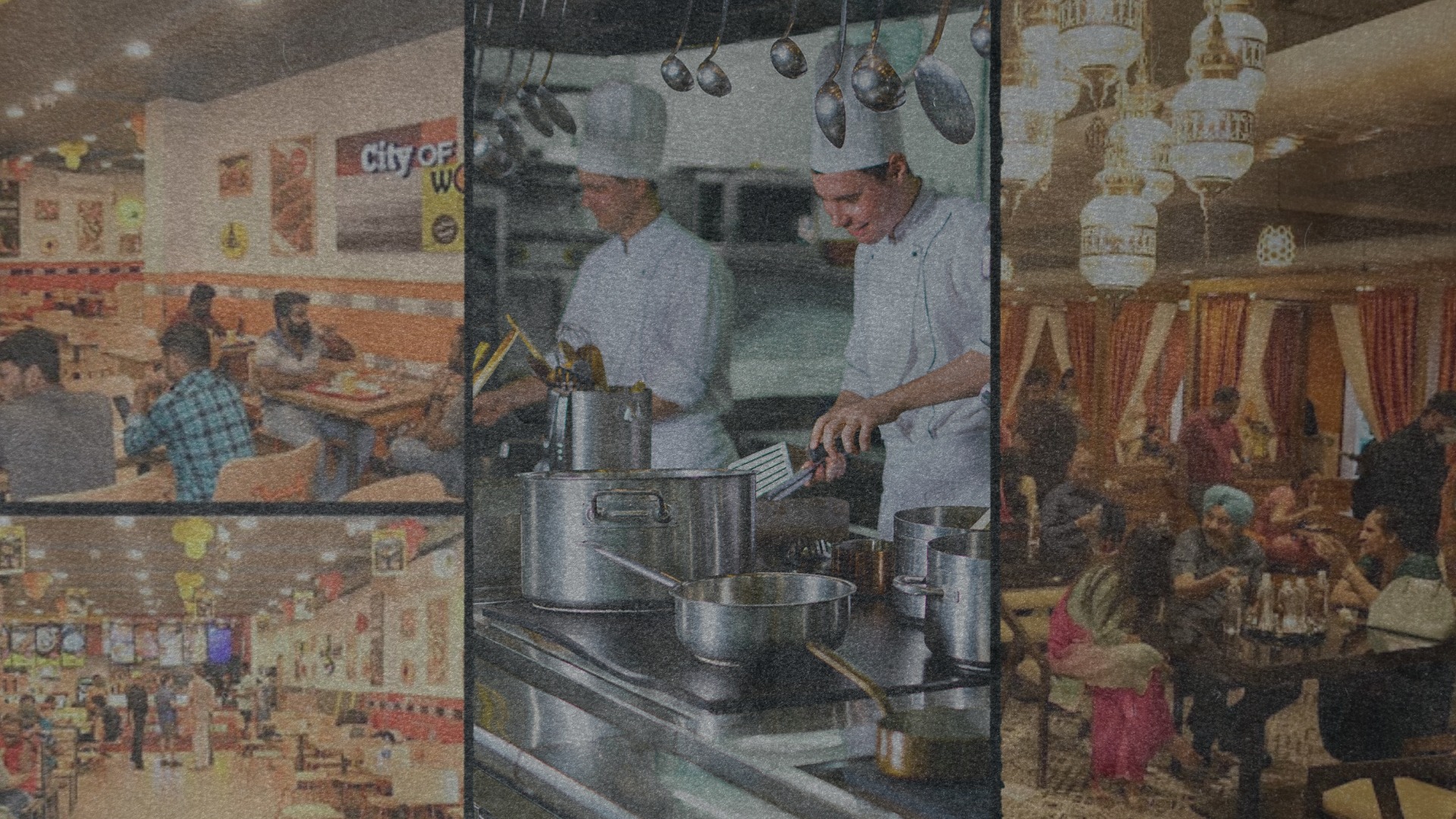
The food business is never ending. Until humanity exists, food businesses thrive. As long as people eat, the food industry will continue to expand, evolve, and reinvent itself.
The numbers tell the story. From cloud kitchens to dine-in formats and especially QSRs (Quick Service Restaurants), the food services sector is growing at a pace unlike anything seen in the past decade. Consumer behavior is shifting, new brands are emerging, and structural trends are shaping a more organized and scalable food ecosystem.
Recent industry reports highlight this shift with compelling data points and growth metrics that help us understand where this industry is today.
So, let’s dive deeper first into the numbers and then into the “why.”
According to the 2025 edition of Swiggy’s annual report “How India Eats,” released in partnership with Kearney, India’s food services market is on track to cross $125 billion by 2030. What’s even more interesting is the structural shift happening within the sector: The organized food services segment is projected to grow at nearly twice the pace of the unorganized market.
The report highlights a major transition that is happening: the organized food services segment, which is powered by cloud kitchens, QSRs, and café chains, is going to account for more than 60% of the sector’s total growth in coming years.
But what’s so special about this? This is because, for the first time, it is going to surpass the unorganized market, which is a huge turning point in how India eats and how food businesses scale.
Now, for our better understanding, let’s put this in perspective: even with its massive and diverse food ecosystem, India’s food services industry contributes just 1.9% to the country’s GDP, far below markets like China (5%) and Brazil (6%). This gap is not a weakness, but it is headroom, and it signals just how early India still is in its food services evolution.
Fine dining restaurants are projected to grow at 11–13%, cafés at 10–11%, and pubs/bars at 9–10%, steady and resilient.
Interestingly, casual dining remains the backbone of the organized food services ecosystem, accounting for 49% of the market today.
But as I said earlier, we need to understand the reasons why it is booming.
As we all think, it is not just rising incomes, digital access, or the convenience-led lifestyles.
First is that people are experimenting more. There is a 20% increase in the number of unique cuisines ordered per customer, and the next point is that choice is expanding.
As per the report, almost all customers are now ordering from 30% more restaurants compared to previous years.
Simply, curiosity is replacing routine. And when brands offer consistency, speed, and experience, they are booming.
Well, there are even more intriguing insights from the report. This is about the shift in when and what Indians are eating.
Traditional mealtimes are fading, and food is becoming an on-demand lifestyle choice.
For example, late-night consumption is exploding. Orders placed after 11 PM have grown nearly 3× faster than regular dinner orders, with pizzas, cakes, and soft drinks leading the demand.
Convenience, work shifts, and the culture of late-night entertainment are reshaping India’s eating habits.
At the same time, there’s a parallel movement rising on the health and wellness wave. Orders labelled healthier alternatives are growing at 2.3× the pace of overall food ordering, with customers increasingly looking for higher protein, lower sugar, calorie awareness, clean labels, and functional nutrition.
Even India is rediscovering its food identity. Hyper-regional cuisines like Goan, Bihari, and Pahadi dishes are seeing growth rates about 2x and 8x those of mainstream cuisines.
What’s even more surprising is buttermilk and sharbat are growing at 4-6x.
Now when we understand the reason behind all of these, there are some triggers. But the major influence today is solely attributed to social media influence and food discovery.
In the end, the story of India’s food services industry is much bigger than numbers or growth charts. And as this transformation continues, one thing becomes clear: the future of India’s food industry is going to be better than ever, and it rewards moments, culture, convenience, and connection.
And what we are witnessing is the beginning of this boom, and in the future, it will redefine the industry.
Let’s see how this evolves in coming years.