



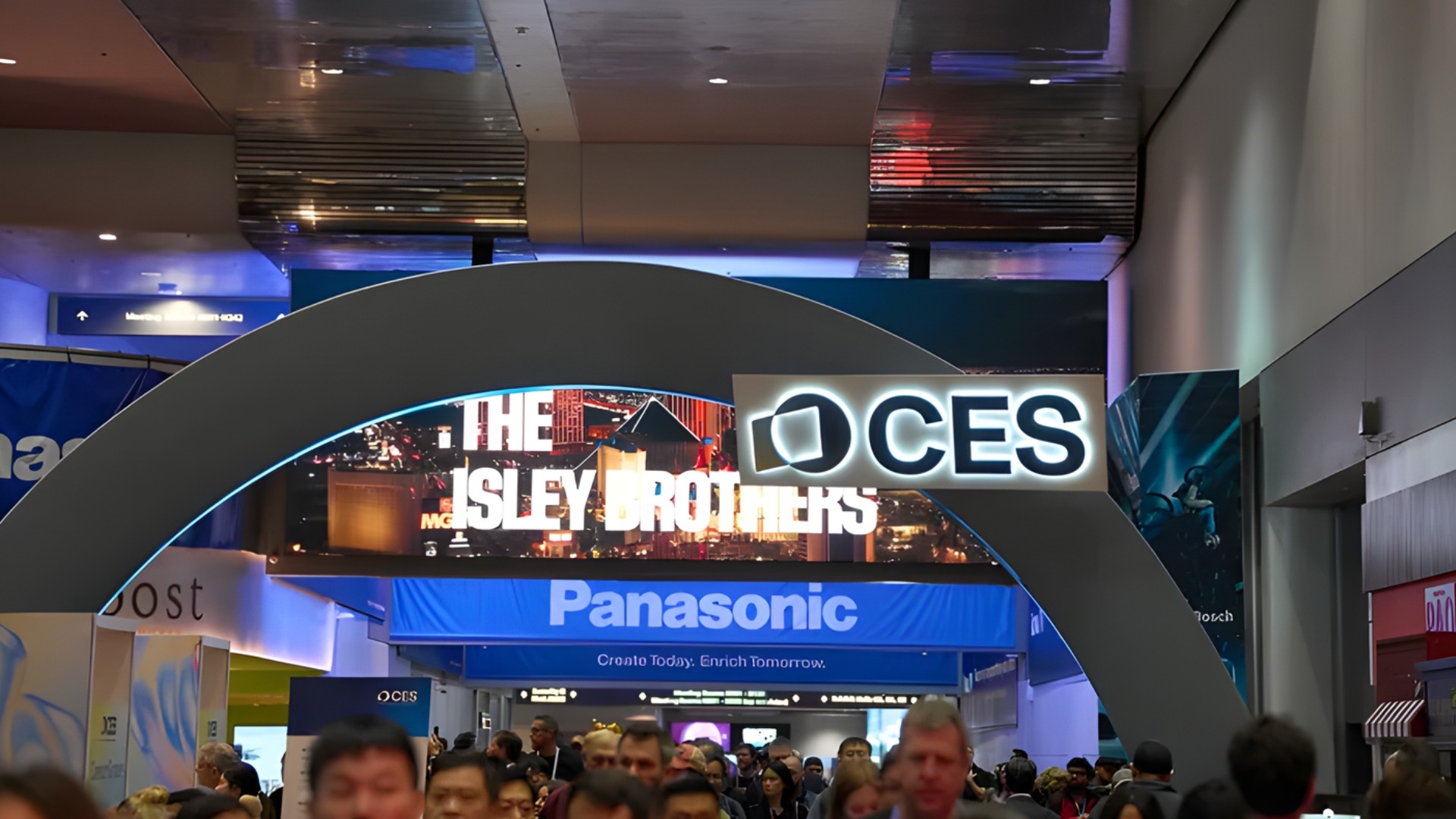
The global technology industry has converged on Las Vegas as CES 2026 opens with artificial intelligence taking center stage. The annual event, running through January 9, features more than 4,500 exhibitors across 2.6 million square feet, drawing over 140,000 attendees from 150 countries.
Nvidia CEO Jensen Huang set the tone with a January 5 keynote at the Fontainebleau, unveiling advances in next-generation AI accelerators beyond the Blackwell architecture. AMD’s Lisa Su followed at the Venetian, spotlighting progress in the MI300 AI accelerators and the Ryzen AI 400 series chips, as demand for AI PCs surges globally. Intel’s Jim Johnson introduced the Core Ultra Series 3 processors, built on the 18A process, signaling Intel’s renewed competitiveness in the AI hardware race.
Beyond the semiconductor announcements, industrial AI and robotics are commanding attention. Siemens CEO Roland Busch is slated to detail the integration of AI, automation, and digital twins into future manufacturing and infrastructure systems. Huang will join Busch to explore how accelerated computing is bridging the digital and physical worlds.
Robotics and physical AI are also taking a prominent role, with LG, Hyundai, and Boston Dynamics unveiling new home assistants and industrial robots ready for real-world deployment. Lenovo Chairman Yuanqing Yang will headline discussions on “Smarter AI for All,” illustrating the company’s AI-driven innovation across sports and enterprise applications. CES 2026 underscores how AI’s influence now extends well beyond silicon reshaping industries, infrastructure, and everyday life.