



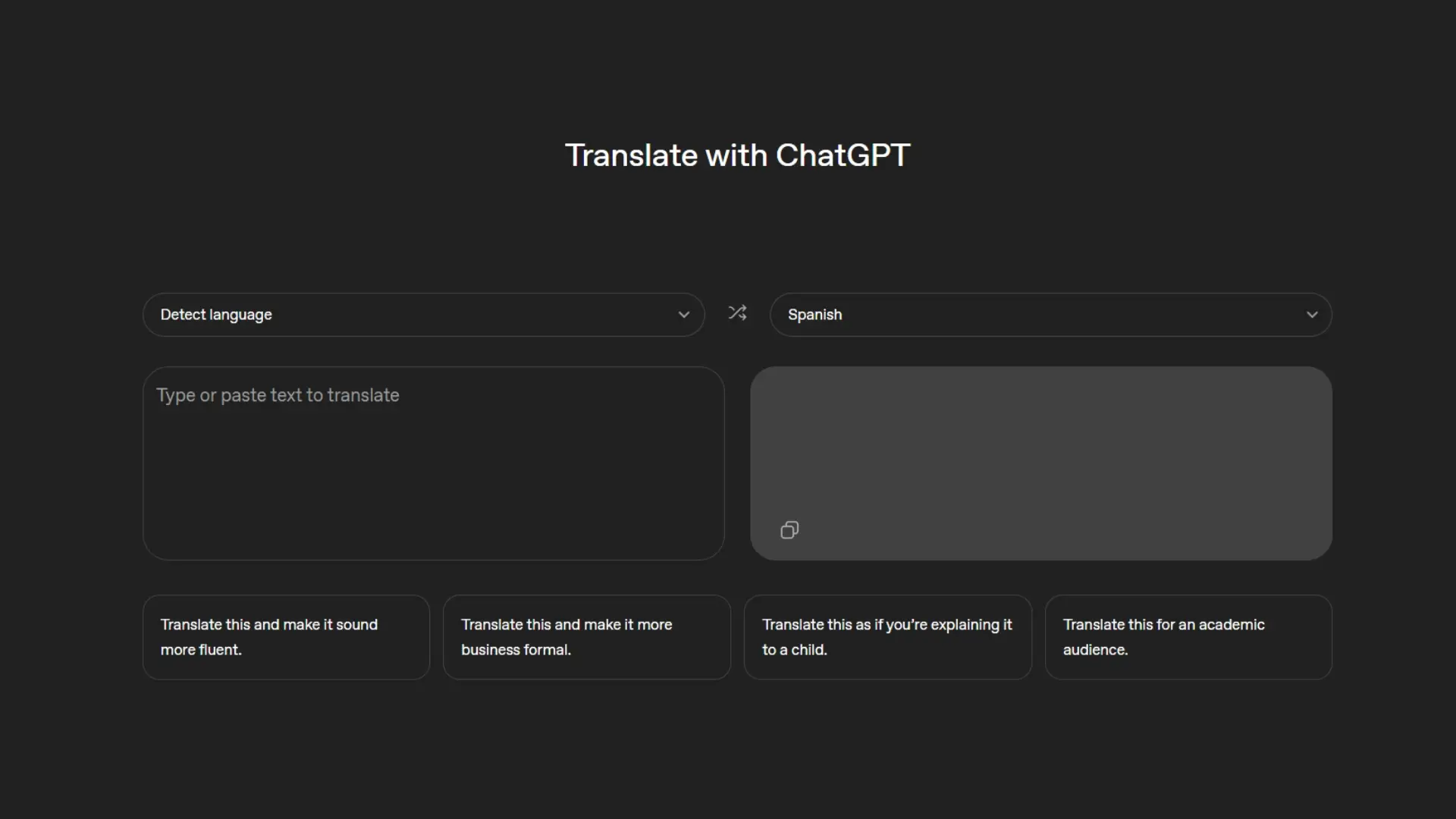
OpenAI on January 15 unveiled ChatGPT Translate, a standalone language translation tool, while simultaneously ending ChatGPT’s availability on WhatsApp after new restrictions from Meta. The dual moves mark a significant realignment in how users access OpenAI’s conversational AI.
ChatGPT Translate, available at chatgpt.com/translate, supports over 50 languages and mirrors the familiar dual-pane layout popularized by Google Translate and DeepL. Unlike its rivals, it focuses on contextual adaptation, allowing users to refine tone ranging from business formal to casual through integrated prompt options. OpenAI says the tool aims to deliver translations that “capture meaning, not just words,” though voice and image inputs remain inactive for now.
Meanwhile, ChatGPT’s WhatsApp integration launched in late 2024 and used by more than 50 million people was discontinued following Meta’s updated Business API terms. The new policy prohibits distributing general-purpose AI assistants on WhatsApp, citing infrastructure demands and the platform’s focus on enterprise support use cases.
The restriction affects several AI providers including Perplexity AI, Luzia, and Poke. Regulatory bodies in the European Union, Italy, and Brazil have begun examining whether the move unfairly benefits Meta’s own AI products.
OpenAI has advised users to link their WhatsApp numbers to their ChatGPT accounts before the cutoff to retain chat continuity. The chatbot remains available via the web, iOS, Android, and desktop interfaces.