



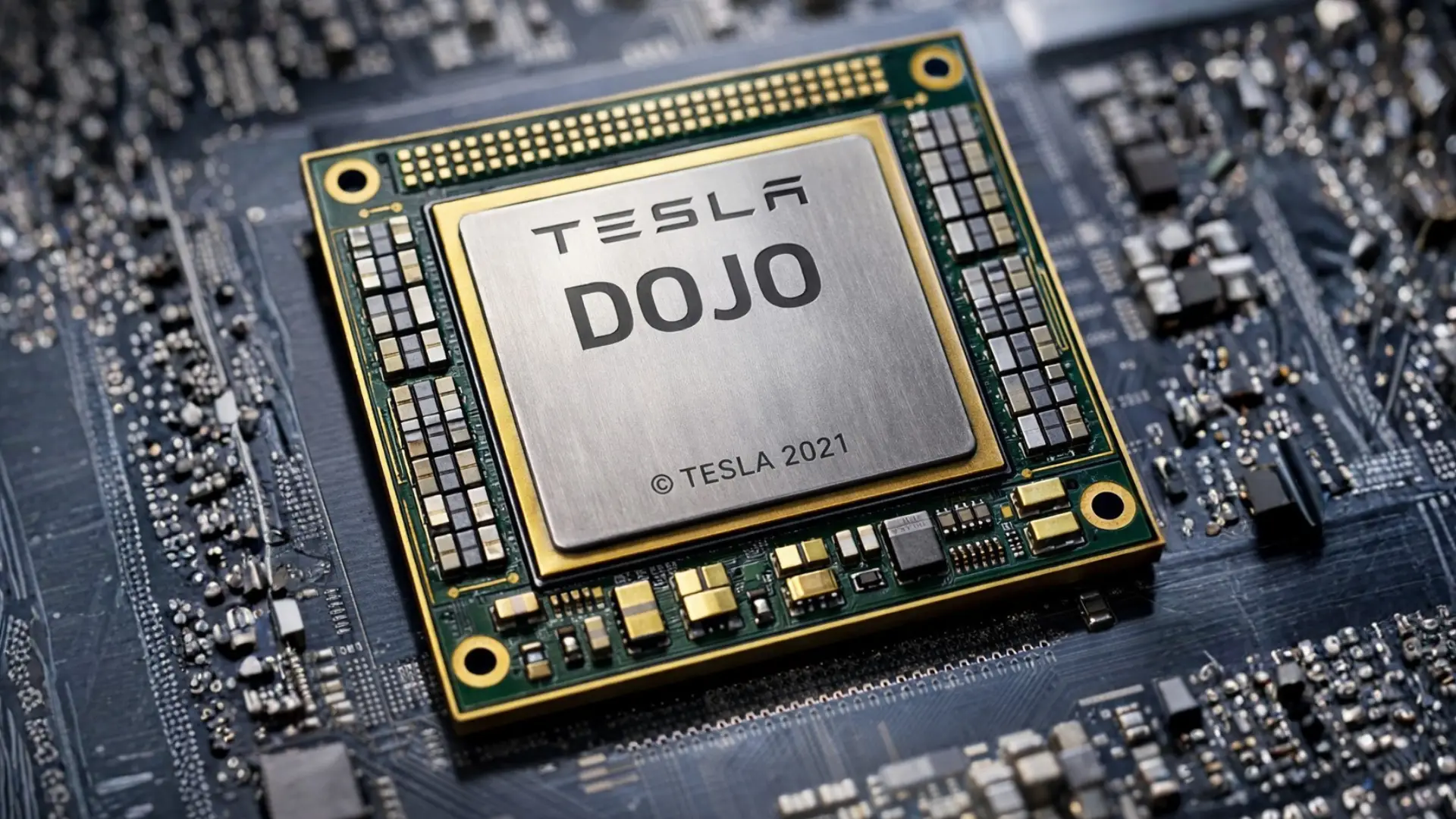
Tesla is reviving its in-house Dojo3 supercomputer project, marking a surprising turnaround less than half a year after CEO Elon Musk called the previous version an “evolutionary dead end.” Musk confirmed on X that the company will restart Dojo3 development now that its next-generation AI5 chip design is “in good shape,” and invited engineers to join what he described as the “highest volume chip effort in the world.”
The reversal comes after Tesla shuttered its Dojo team in August 2025 and parted ways with project lead Peter Bannon. Dojo, first deployed in 2023, was designed to train Tesla’s Full Self-Driving (FSD) software using vast volumes of real-world driving data. By bringing the project back, Tesla signals a renewed push to boost its AI training capabilities as competition in autonomous systems intensifies.
The AI5 chip, slated for production in 2027, is expected to deliver major performance gains over Tesla’s current AI4 hardware. The company will reportedly manufacture the chip through both TSMC and Samsung, aiming for a scalable, cost-efficient architecture. While Tesla continues to rely on NVIDIA GPUs for high-performance AI workloads, Musk has indicated that in-house chips will play a growing complementary role.
The Dojo3 revival arrives as Tesla gears up for the launch of its Cybercab robotaxi in 2026. The investment underscores Tesla’s commitment to maintaining control over AI hardware development an effort that could prove pivotal as the company races to validate its self-driving technology in a critical year ahead.