



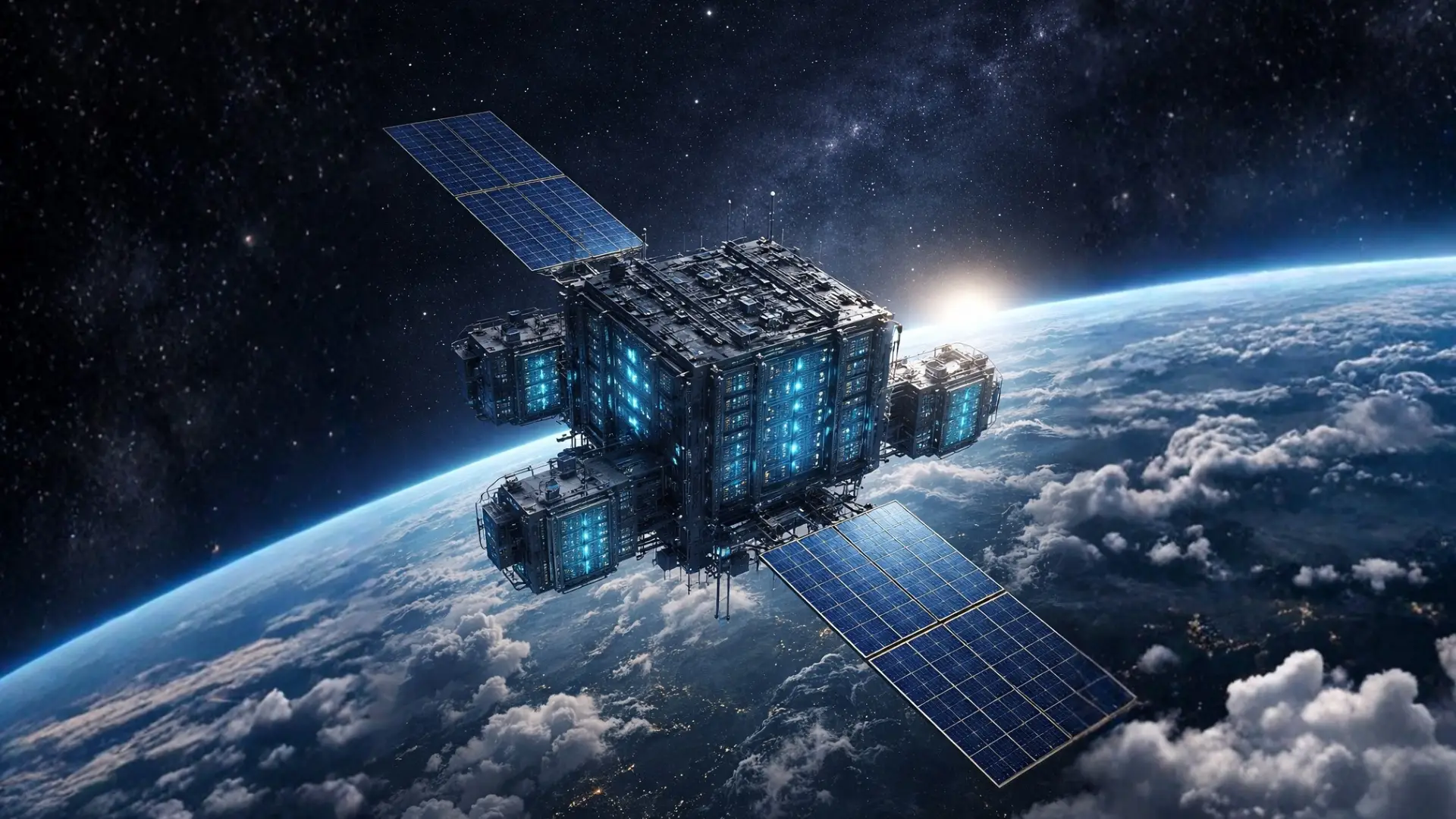
As artificial intelligence drives an unprecedented surge in computing demand, the energy needed to power and cool data centers on Earth is reaching critical limits. Industry leaders are now looking beyond the planet’s atmosphere to solve AI’s growing energy conundrum by taking data centers into space.
Sophia Space, unveiled at the AIAA SciTech Forum in Orlando, has developed a modular, passively cooled architecture that could revolutionize computing efficiency. Its orbital design rejects heat directly into space, reducing cooling energy demand from 92% to just 8%. By operating in near-zero temperatures, these orbital systems may bypass one of Earth’s biggest computing bottlenecks power-hungry cooling.
This shift is fueled by what experts describe as a looming “AI energy crunch.” The International Energy Agency projects global data centers could consume up to 945 terawatt-hours by 2030 nearly Japan’s total power use. Google’s Project Suncatcher, developed with satellite firm Planet, plans to test custom TPU chips in orbit by 2027. Meanwhile, Nvidia-backed Starcloud recently achieved a milestone by training Google’s Gemma AI model on an Nvidia H100 chip aboard its Starcloud-1 satellite.
Top executives are taking note. Jeff Bezos foresees gigawatt-scale space data centers within two decades, arguing that current on-Earth construction mirrors early industrial decentralization errors. Elon Musk has hinted that SpaceX could adapt its Starlink satellites for AI computing, signaling fierce competition ahead.
Despite high ambitions, challenges from debris management to regulation remain but the race to power AI from space has officially begun.