



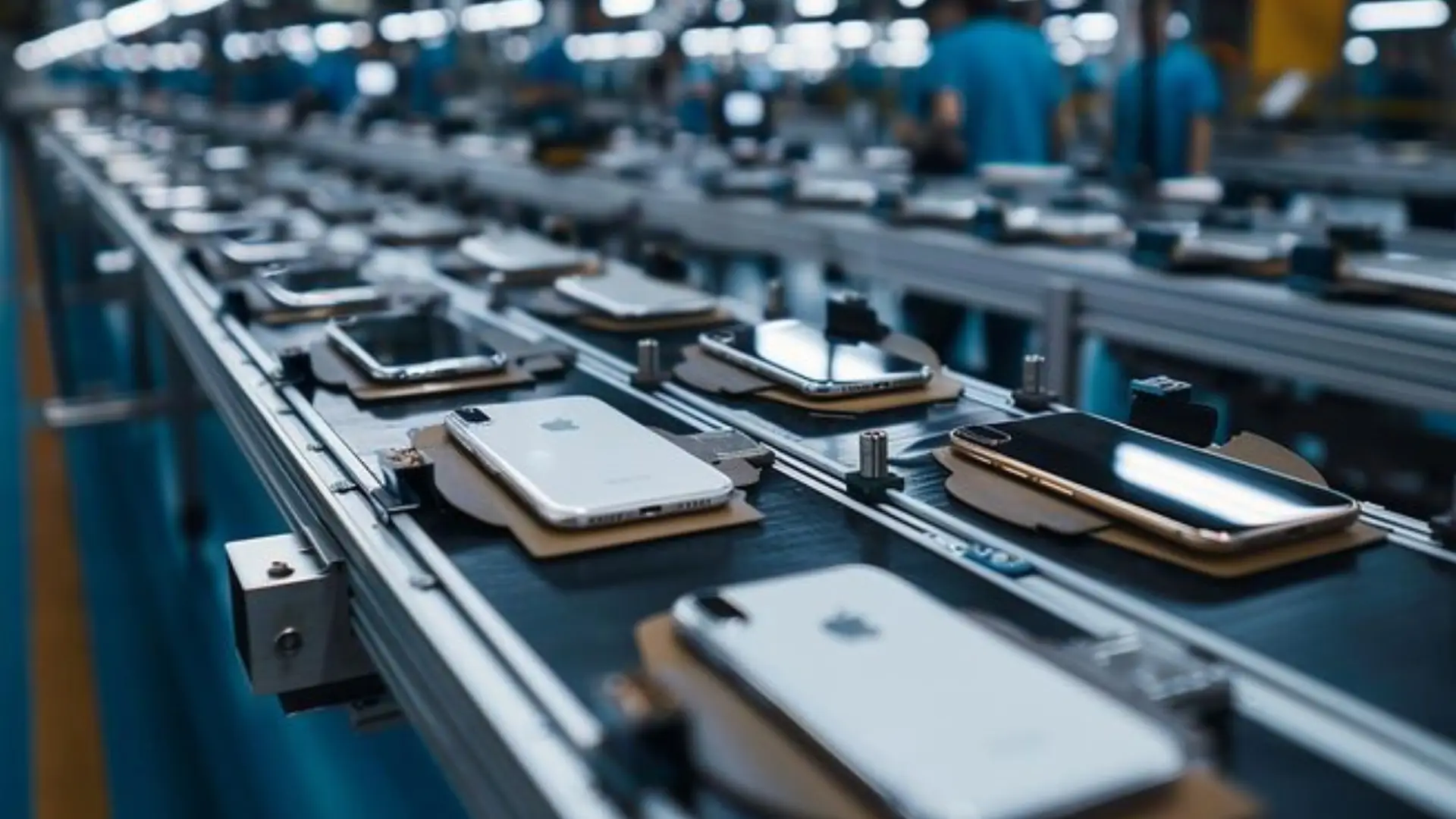
India’s mobile phone manufacturers are lobbying the government for crucial tariff corrections in the upcoming Union Budget 2026–27, citing an “inverted duty structure” that is inflating production costs. The industry’s appeal follows China’s decision to curb exports of advanced manufacturing machinery pushing Indian firms to develop equipment locally, but at significantly higher costs.
The India Cellular and Electronics Association (ICEA), representing companies such as Apple, Foxconn, Dixon, Xiaomi, Vivo, and Oppo, has urged the finance ministry to eliminate duties on parts used to build capital equipment domestically. ICEA warned that maintaining the current structure, where finished machines can be imported duty-free but their components attract 5%–25% duties, undermines India’s manufacturing competitiveness.
Executives say sourcing alternative machinery from countries like Japan or South Korea would raise costs by up to four times, underscoring the need for policy action. According to sources, the government is reviewing the proposals, with expectations of a possible announcement in Finance Minister Nirmala Sitharaman’s Budget presentation on February 1.
ICEA has also sought reductions in basic customs duty on mobile components such as microphones, speakers, and PCB assemblies from 15% to 10% and similar relief for wearables and display assemblies. The association estimates India’s mobile phone production will touch $75 billion this fiscal year, with exports exceeding $30 billion.
With leading manufacturers accelerating their India expansion plans, including Apple’s target to double iPhone output by 2026, industry stakeholders argue that resolving the duty imbalance is essential for sustaining the country’s electronics export growth trajectory.